This weekend I did a lot of programming on this project. All the interesting stuff related to the math is still pending, but most of the boring stuff is now complete.
- Setting up an appropriate development environment.
- Enabling Raspberry programming with code-completion from Windows.
- Enabling Windows builds of the code for testing the math algorithms.
- Developing application drivers for the Raspberry hardware components.
- Ensuring correct setup of hardware components.
- Ensuring adequate correctness and performance of application drivers.
- Added documentation for the classes in the hardware layer.
- Adding high level documentation for the math components that will be added next.
Reading up on the hardware specifications for the sensor board was a TODO identified as part of the first posting about the sensor board. I am not a hardware guy, so that took a long time.
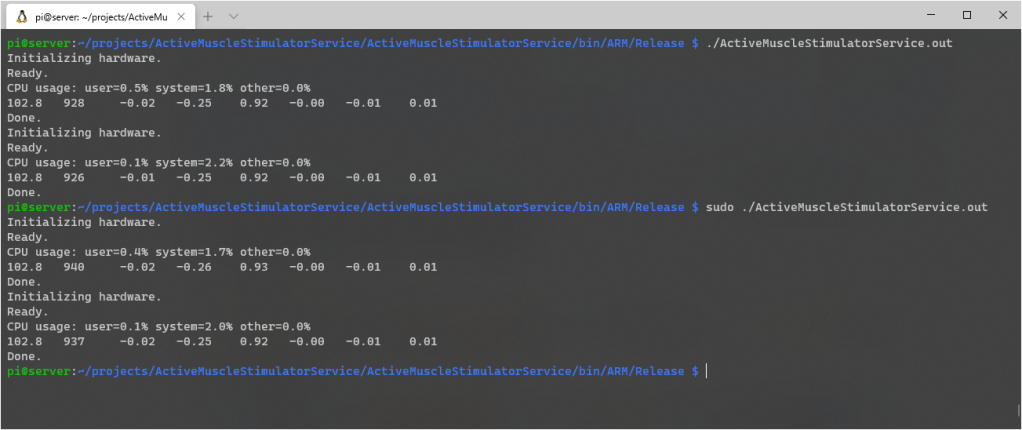
With a few lines of replacements for the standard wiringPi code, I managed to bring down the resource usage of data collection, so that we have sufficient CPU cycles avilable for all the clever math coming up next. I have written a high level description of the upcoming math libraries here.
I am looking forward to adding the math libraries so I can test the new hardware on the road.

 Active Muscle Stimulator (Trask)