I have been active in sports all my life, in particular doing cycling, running and swimming. I don’t do these activities at the same time, but rather as a set of three activities, where any will do, depending on weather and physical ability. I always found it beneficial having a fallback activity when specific muscles needed a rest.
About five years ago, I started having some issues with leg muscle control when it was cold outside. My muscles would cramp for no apparent reason, making it harder to walk. This condition slowly progressed into my legs now having constant spasms and my walk continuously being difficult. I have had a few accidents falling on stairs because I am unable to lift my feet up high enough. This obviously complicates activities such as running.
The neurology department diagnosed me with HSP (Heriditary Spastic Paraplegia) – a group of progressive neurological disorders, primarily related to loss of motor control of lower extremities. Not a great thing, but it really was nice getting a name for the obviously observable condition.
Fixing the Lower Body Motor Skills
Given my history in computer programming, I decided this problem could be solved with a small computer. I had a small Raspberry Pi 2 B in a drawer, and decided it would be a good starting point for a prototype. I ordered a few things from Amazon UK, which arrived mid February 2020.
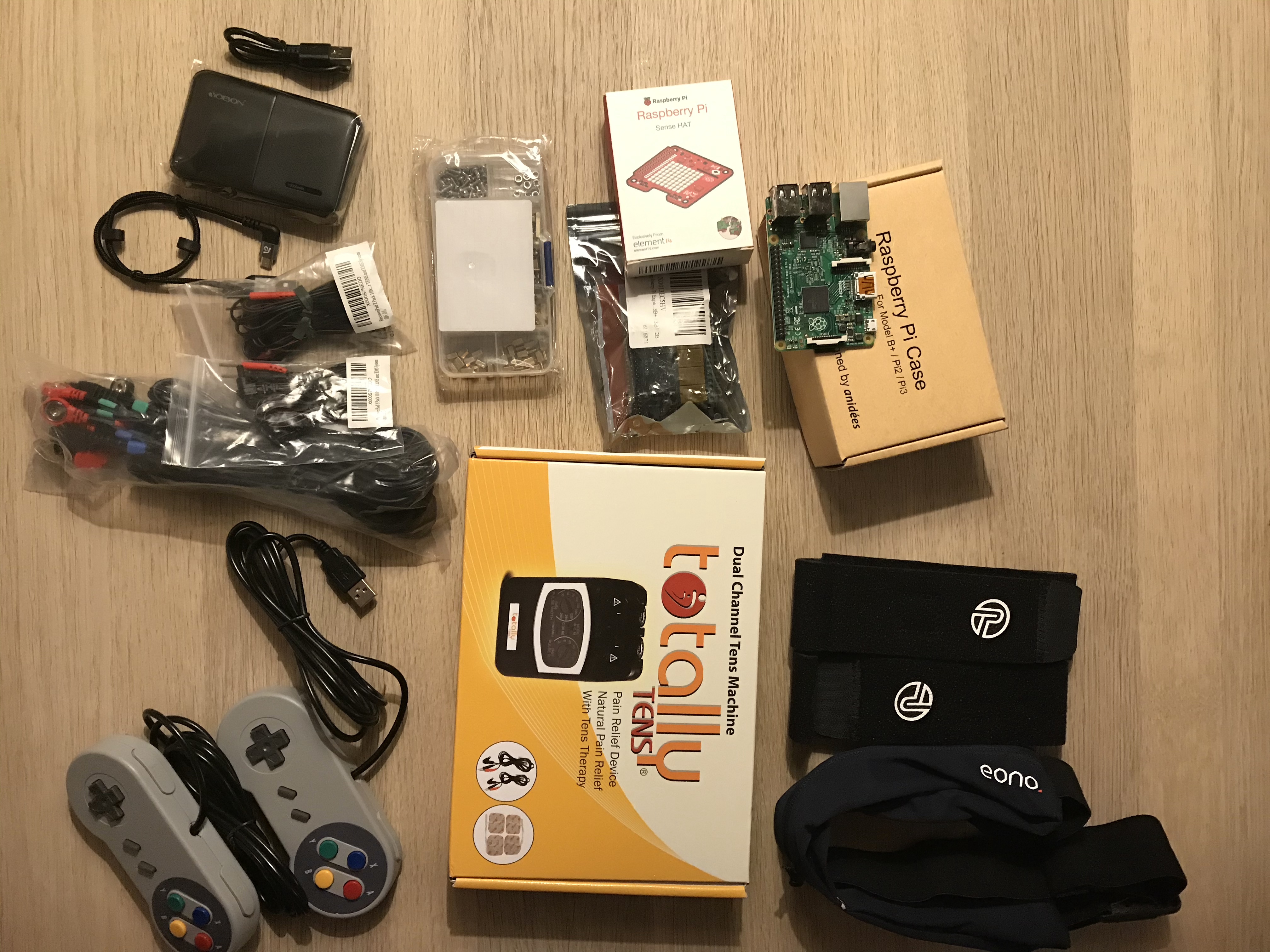
Components for the Active Muscle Stimulator prototype arriving from Amazon UK in February 2020.
The idea was to attach two small extensions to the Raspberry Pi computer, namely a Relay HAT and a Sense HAT (Hardware Attached on Top). The relay hardware would enable the computer to turn on and off the signals generated by an EMS unit (Electronic Muscle Stimulation). The sensing hardware would enable the computer to sense acceleration and rotation (like in almost every mobile phone today). Given the ability to sense movement, I thought it would be simple to trigger when to turn on and off the signals for the muscles.
After having assembled the hardware and built a small program for learning how to translate movement into muscle activation, I decided to take it for a test run. The hardware was conveniently attached in a belt, with wires for electrodes going out on each side.
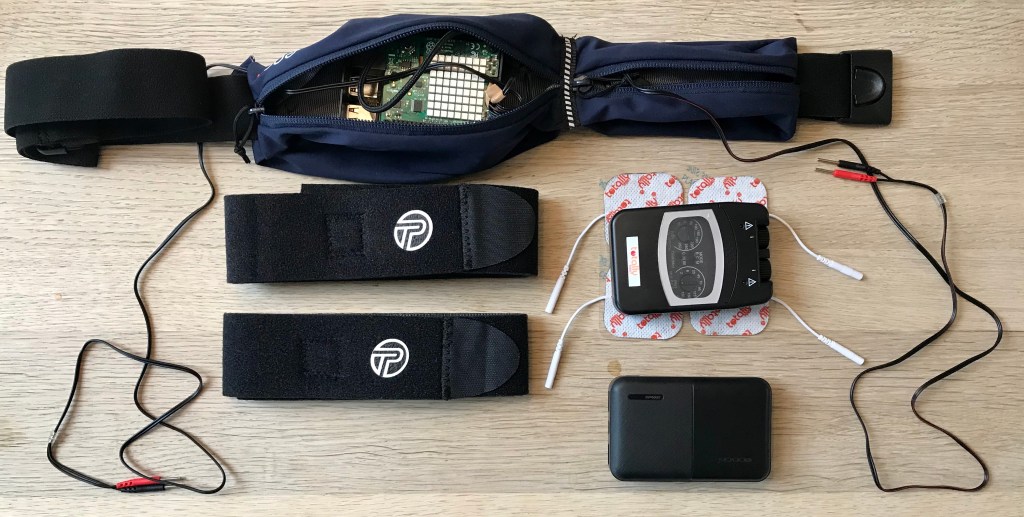
Running With a Muscle Stimulator
I brought a camera the 2nd time I tried running with the prototype.
I was positively surprised by the effects this device had on my ability run. It really seemed to correct most of the challenges caused by my condition.
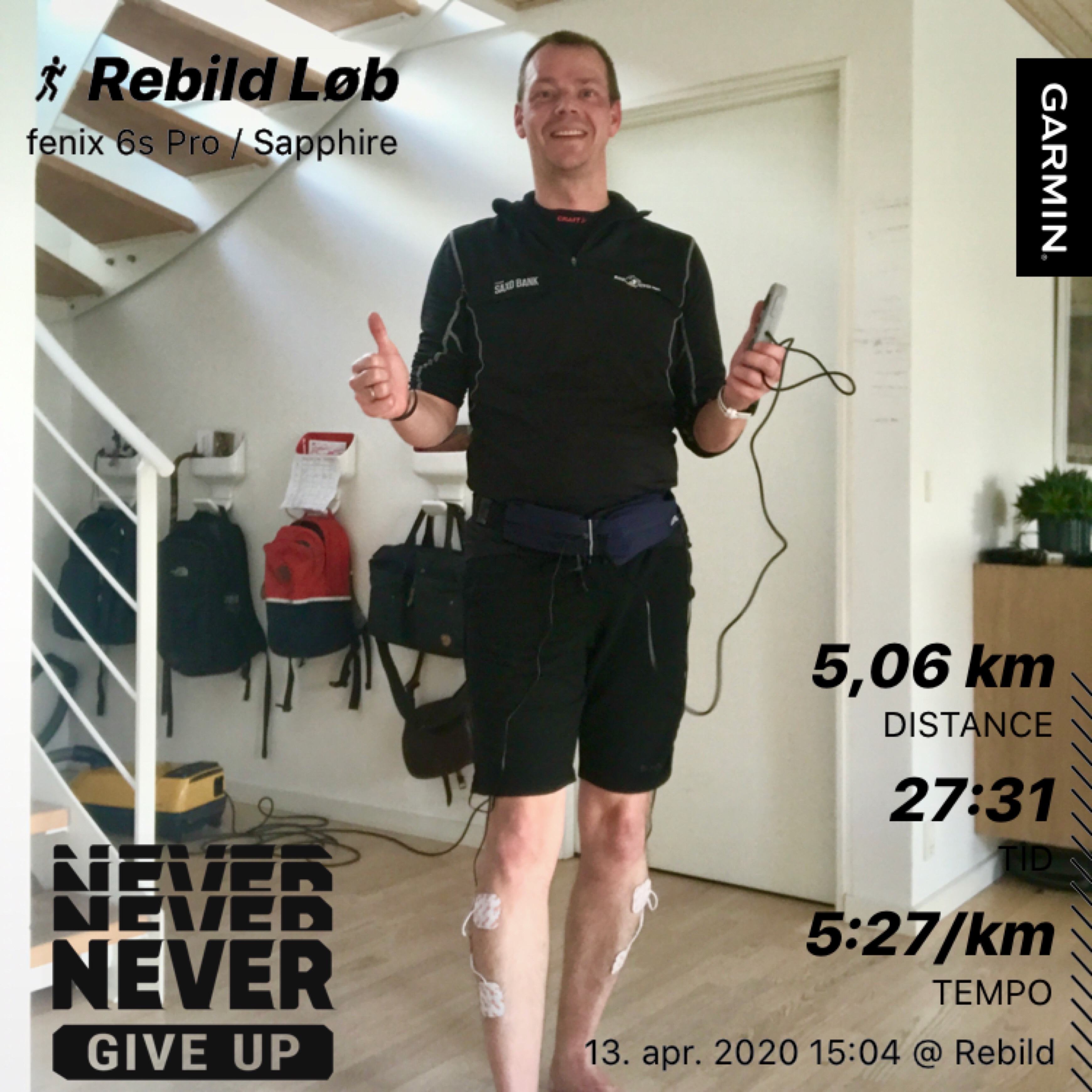
First 5 km run in years. Yet another indication that this is great idea.
What’s Next?
Now convinced it is possible run, as long as I bring a computer for the ride, I decided to construct a smaller (more portable) device, preferably with a smoother muscle activation (in order to avoid early muscle fatigue).
I have decided that the details on the construction of this device should be public and free, along with the software I have constructed for translating movement into muscle control. More on this later.

 Active Muscle Stimulator (Trask)
One thought on “Active Muscle Stimulator Background”